First Look
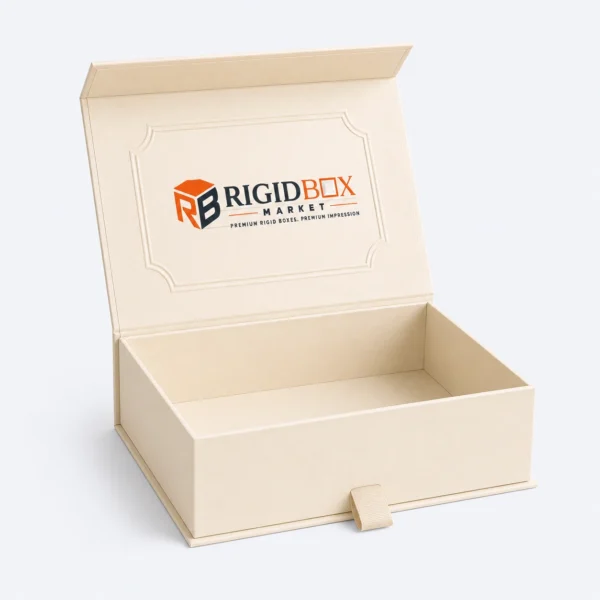
Handbag rigid boxes have to protect a product with more structural presence than most other accessories — a bag holds its own three-dimensional shape even before anything is placed inside it, and the packaging needs to preserve that shape through shipping and warehouse handling rather than letting the bag collapse, sag, or crease against the sides of an ill-fitting box. A structured tote or satchel is particularly unforgiving here, since its defined panels and corners are meant to hold a crisp silhouette that even minor compression during shipping can visibly soften.
Structured Protection
The shell is built from rigid chipboard sized to the bag’s structured footprint, generally with more interior depth than a flatter apparel or accessory box, since a handbag’s handles, hardware, and structured panels all need clearance rather than compression. A dust bag or protective cloth wrap is commonly included inside the box, both as a customer-facing accessory the bag owner will keep using long after purchase and as an added layer of protection against scuffing during shipping. For bags with a defined internal structure, some brands include a lightweight stuffing insert, tissue paper shaped to hold the bag’s silhouette, which prevents the sides from collapsing inward during the months a bag might sit in a warehouse before it ships. Hardware elements, such as metal feet, clasps, or decorative studs, also need clearance within the box so they don’t press against the interior wall and leave an impression on the leather over extended storage.
Customization Options
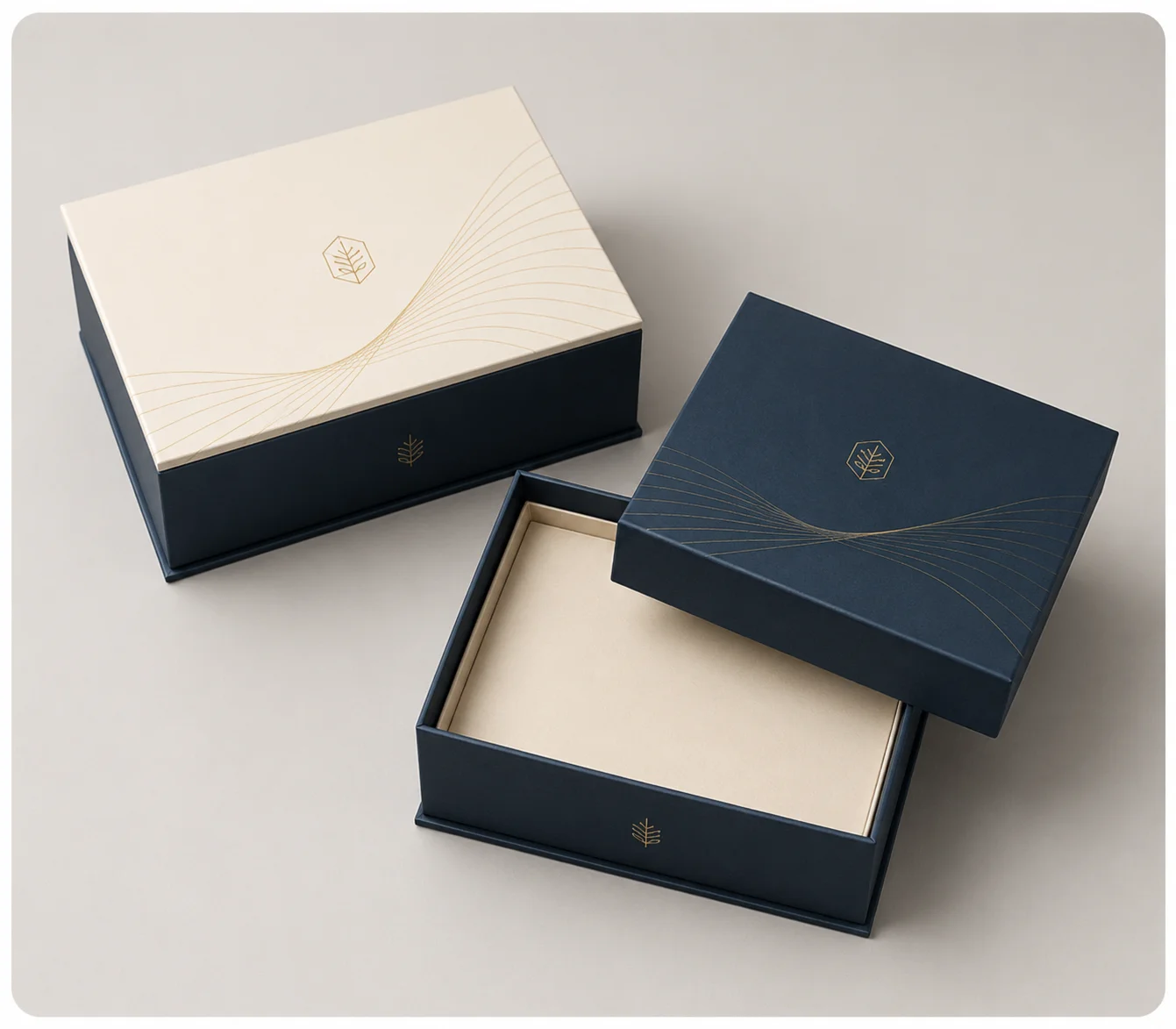
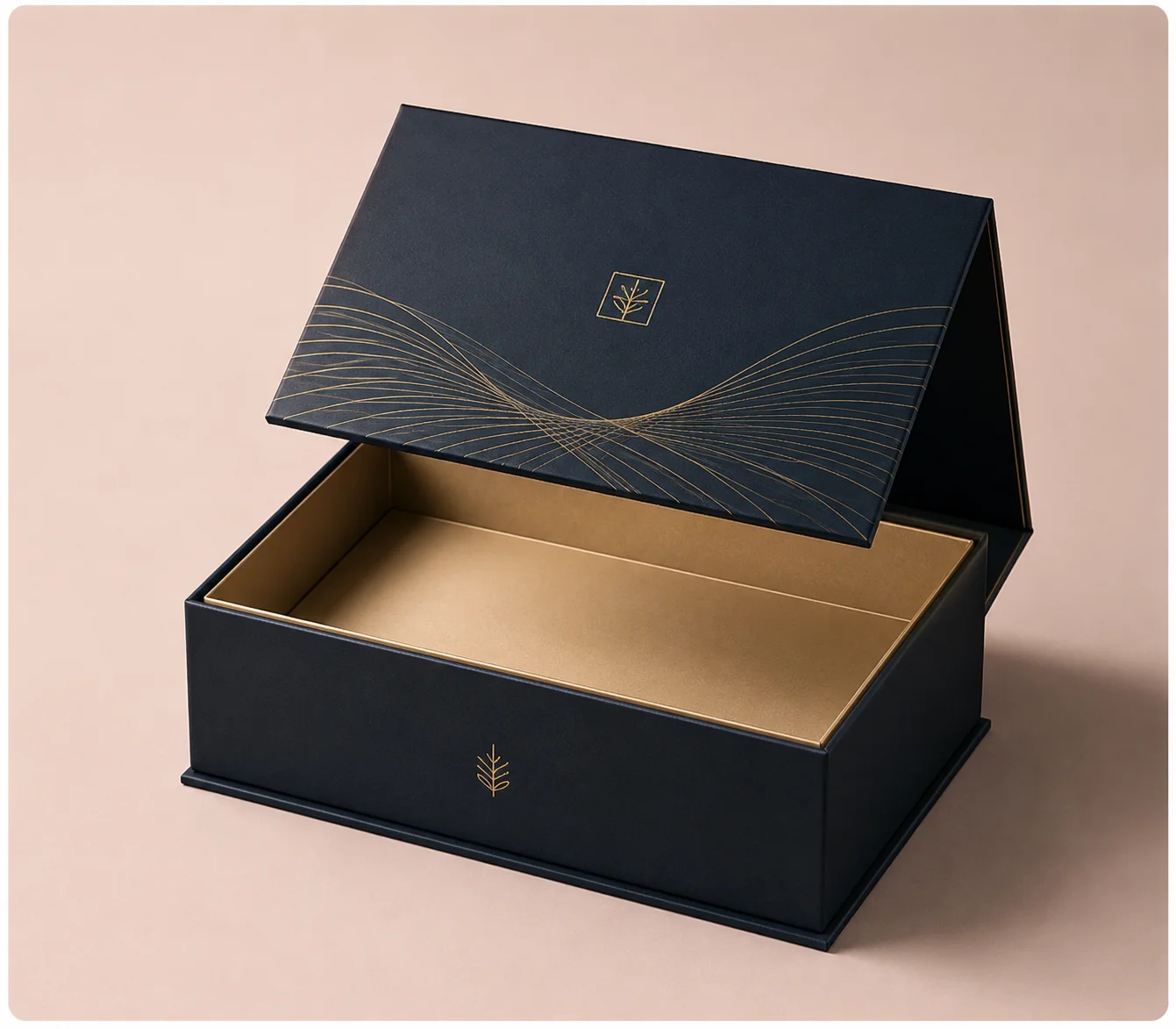
Interior footprint and depth can be built around a specific handbag silhouette, from a compact clutch to a larger structured tote, and multi-compartment inserts are available for brands bundling a bag with a smaller matching accessory such as a wallet or pouch. Standard exterior finishing includes foil stamping, embossing, debossing, spot UV, and matte, gloss, or soft touch lamination, and leather goods brands frequently favor a soft touch or matte exterior that echoes the tactile quality of the leather product inside. Handle clearance at the box’s opening is worth specifying precisely, since a bag’s handles often add height beyond the bag body itself that a generic box footprint can easily underestimate. Removable or crossbody straps add a further sizing variable, since they sometimes need to be tucked separately rather than folded against the main bag body.
- Interior footprint sized to specific handbag silhouettes
- Optional dust bag or protective cloth insert
- Tissue stuffing to preserve structured bag shape during transit
- Foil stamping, embossing, debossing, and spot UV finishing
- Matte, gloss, or soft touch lamination
Who Uses This Box
Handbag and leather goods brands rely on this format across their bag lines, typically building a small number of box sizes to cover compact, medium, and larger silhouettes rather than commissioning a fully custom box for every individual style. Boutiques and department stores carrying multiple handbag brands use it for private label and house-brand collections, where consistent packaging helps unify a shelf of otherwise varied bag styles, even when the bags themselves come from several different manufacturers or design houses. Gift retailers selling handbags as part of a curated accessory bundle also depend on this format’s structural protection to keep the bag presentable alongside other gift items, particularly for higher-end gifting occasions where a handbag serves as the anchor piece within a larger accessory set.
The Rigid Box Market Difference
Preserving a bag’s structured shape through shipping and storage is the detail that separates a handbag box that genuinely protects the product from one that simply contains it, and getting the interior clearance and stuffing approach right depends on understanding the specific bag’s construction rather than applying a generic template. Rigid Box Market builds interior dimensions around the exact handbag silhouette being packaged and holds that fit consistent across full production runs.
A note on whether the bag ships with handles extended or folded helps us plan interior clearance accurately. Share your handbag dimensions and order volume, and we’ll follow up with a free quote.