Overview
Drone rigid boxes have to solve a packaging problem that’s more complex than most single-device electronics categories, since a drone kit typically includes a central body with delicate protruding propeller arms, a separate controller, and often spare propellers or batteries, all of which need individual protection within one coordinated box rather than a single cavity built for one compact device. Because drones are also flown, not just stored, the box frequently doubles as a transport case used repeatedly between flights rather than packaging meant to be opened once and discarded.
Multi-Part Protection
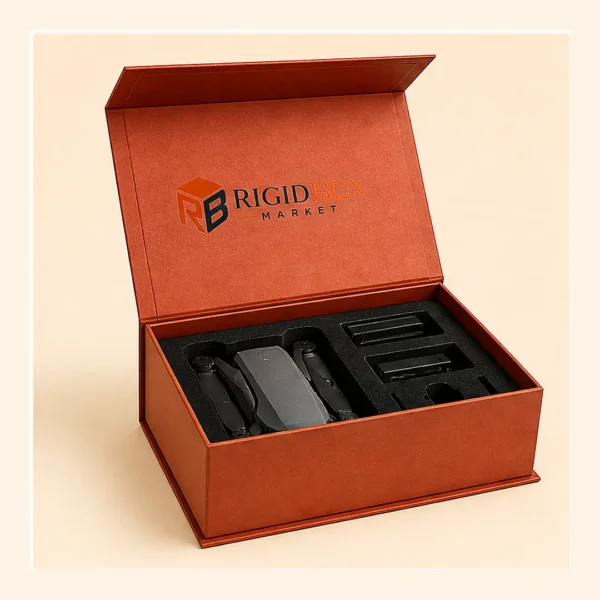
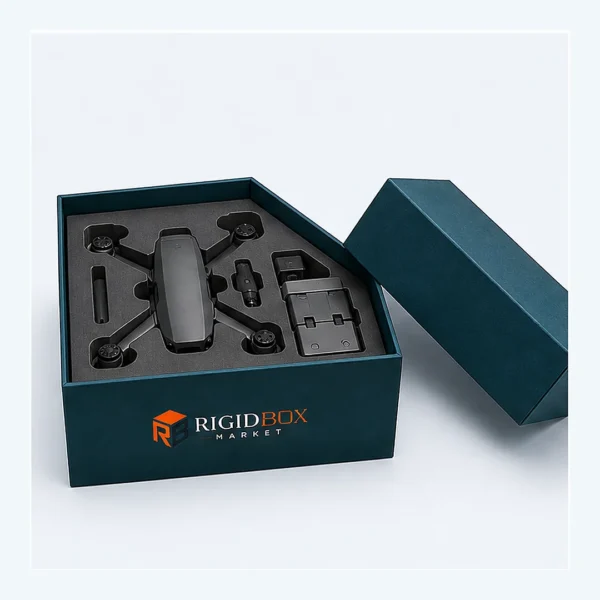
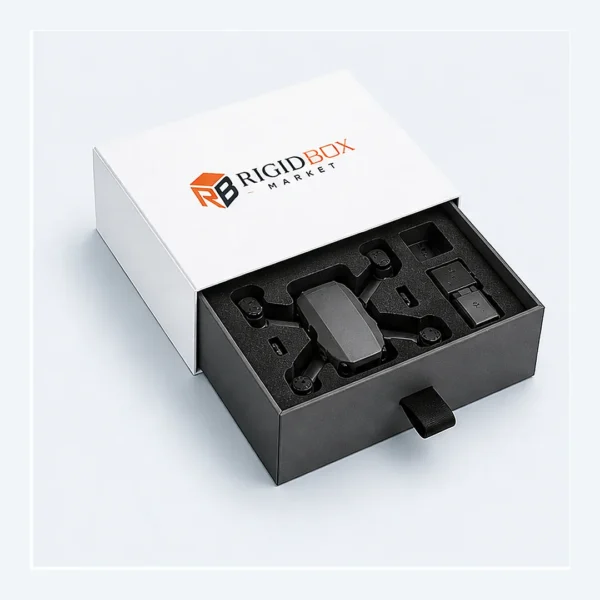
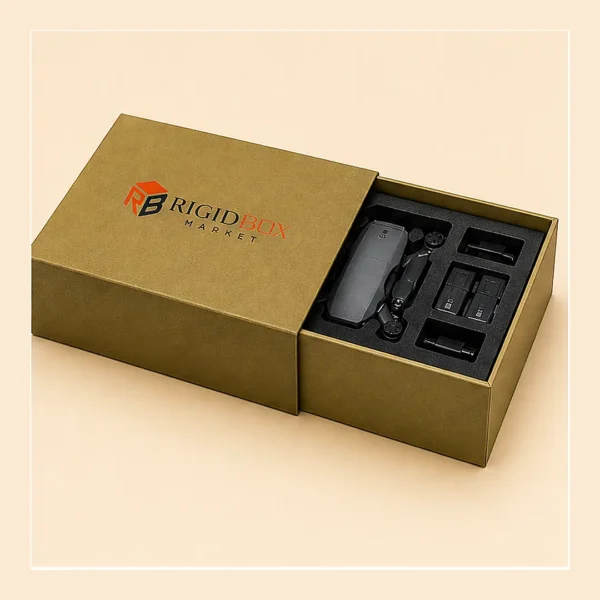
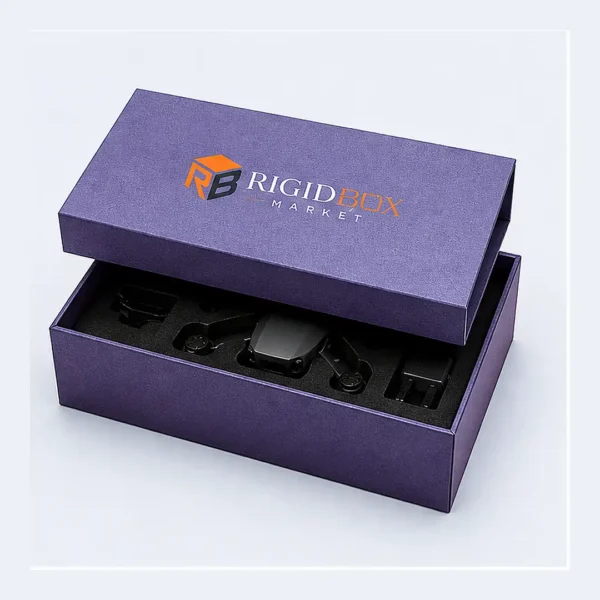
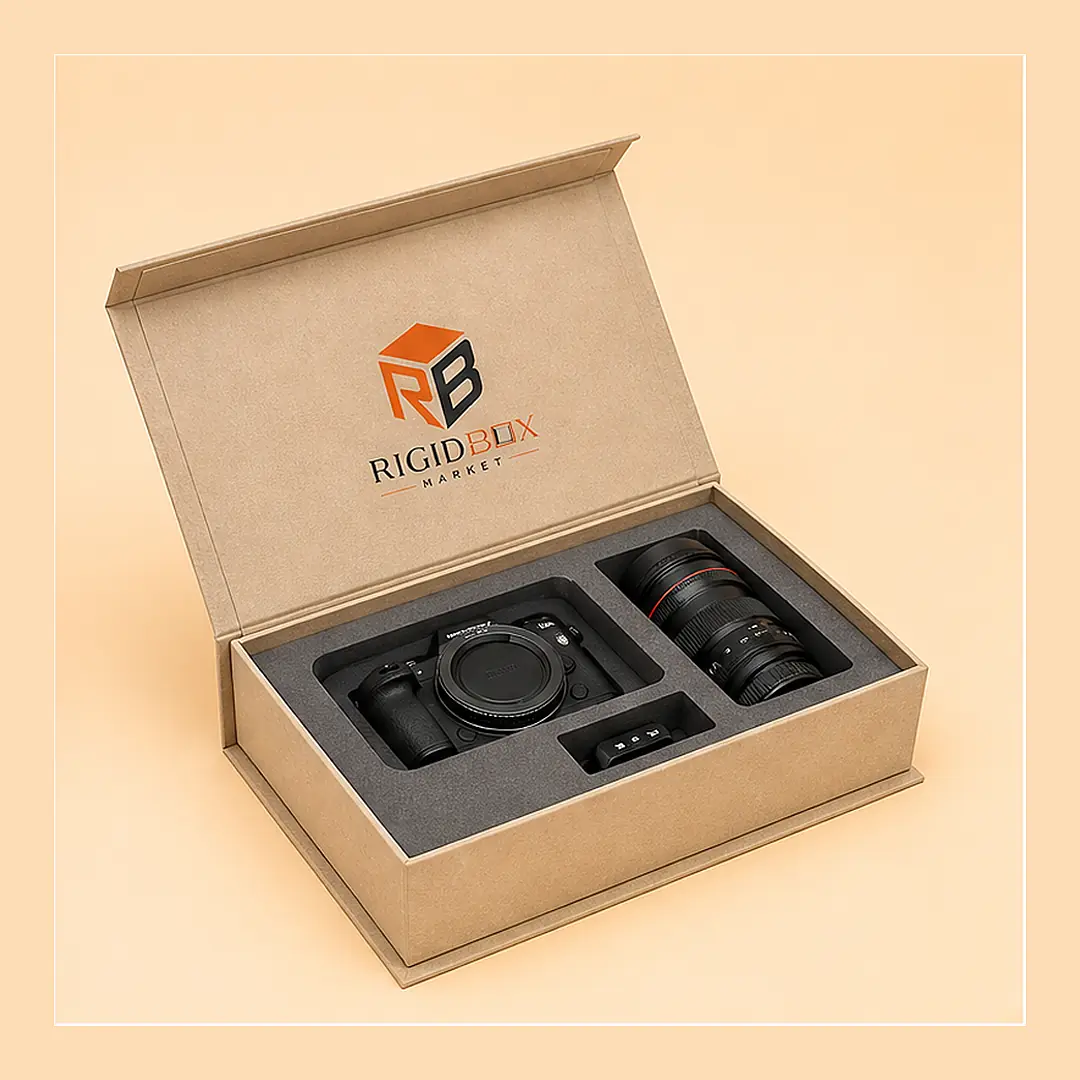
The shell uses reinforced rigid chipboard given the combined weight of a full drone kit, and the interior insert, almost always multi-cavity EVA foam given the precision needed, holds the drone body, controller, and accessories in separate fixed positions. Propeller arms are one of the more structurally vulnerable points on any drone, and cavity design generally needs to support them along their length rather than leaving them to hang unsupported over open foam space, since even moderate shipping vibration can stress an unsupported arm at its connection point to the body. Foldable drone designs, increasingly common for consumer models, simplify this somewhat by collapsing the arms inward, though the cavity still needs to account for the folded profile precisely. Battery compartments, when included, are typically kept separate from other components both for protective reasons and because many shipping carriers have specific handling requirements for lithium battery packaging that affect how a battery cavity needs to be labeled and positioned. Getting battery-related labeling and placement wrong can create real shipping complications, which makes this one detail worth confirming carefully rather than treating as a routine cavity design choice.
Customization Options
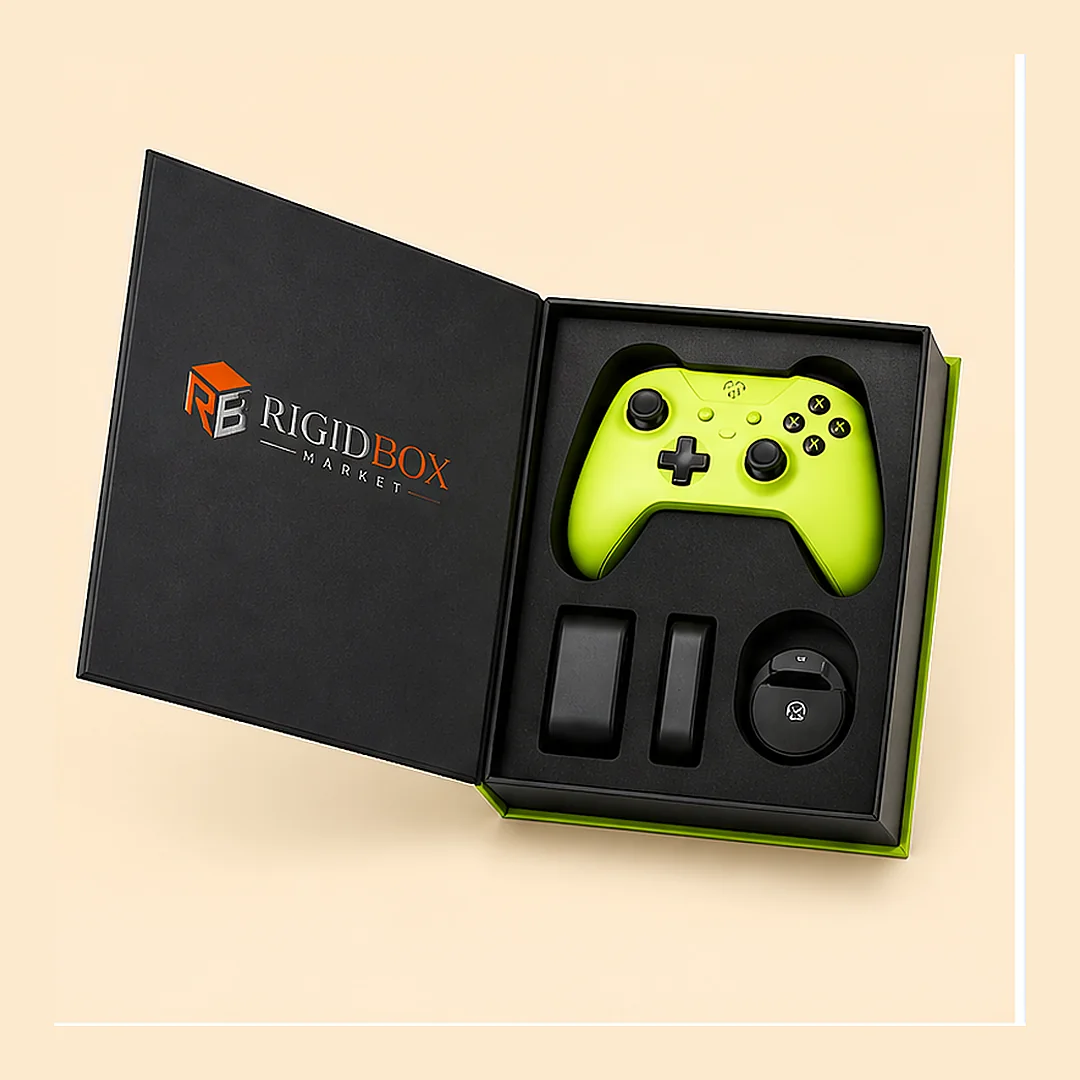
Cavity layout can be built around a specific drone model’s exact component list, including body, controller, propellers, and batteries, with each element given its own supported cavity. Controller cavities in particular need to account for the joystick and antenna protrusions many drone controllers have, which extend beyond the controller’s main body and need their own clearance. Standard exterior finishing includes foil stamping, embossing, debossing, spot UV, and matte, gloss, or soft touch lamination, and drone brands frequently favor a technical, modern exterior design consistent with the broader consumer tech and gaming-adjacent audience many drone products are marketed toward. Matte finishes paired with sharp, angular graphics are especially common in this category, echoing the technical, engineered feel of the product itself. Closures typically use a two piece or hinged lid, built with the strength to support a fully loaded multi-component kit.
- Multi-cavity foam layout for body, controller, propellers, and batteries
- Support along propeller arms to reduce shipping stress
- Separate, clearly positioned battery compartments
- Foil stamping, embossing, debossing, and spot UV finishing
- Matte, gloss, or soft touch lamination
Common Use Cases
Drone manufacturers rely on this format for both retail packaging and replacement part kits, where multi-cavity organization matters as much for setup convenience as for shipping protection. Rental and commercial drone service companies use a more durable, reusable version of this format for equipment that travels between job sites repeatedly rather than shipping once to a single customer. Hobbyist and enthusiast retailers selling drone accessories and upgrade kits also depend on this format’s flexible multi-cavity approach for bundled component sets, where a customer might purchase spare propellers, an upgraded camera gimbal, and extra batteries all in one combined order.
What Sets Rigid Box Market Apart
Coordinating protection across several genuinely different component types within one box is the core engineering challenge of this format, and getting propeller arm support or battery placement wrong risks either physical damage or a shipping compliance issue. Rigid Box Market builds cavity layout around the exact component list of a given drone kit and holds that configuration consistent across full production runs.
Let us know if your drone folds for storage, since that meaningfully changes how compact the cavity design can be. Share your drone kit composition and order volume, and we’ll follow up with a free quote.