Overview
Chocolate rigid boxes have to do two things at once that don’t always pair naturally — look like a premium gift and keep individual pieces from touching, sliding, or melting against each other during transit, all while using materials that are safe for direct or near-direct food contact. Temperature adds a variable most other gift categories don’t have to manage, since chocolate that softens even slightly during shipping can deform against a poorly fitted cavity in a way a sturdier product never would.
Material & Construction
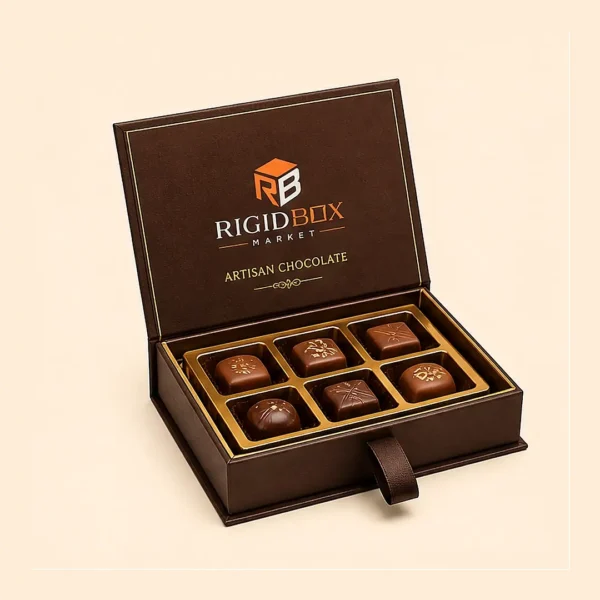
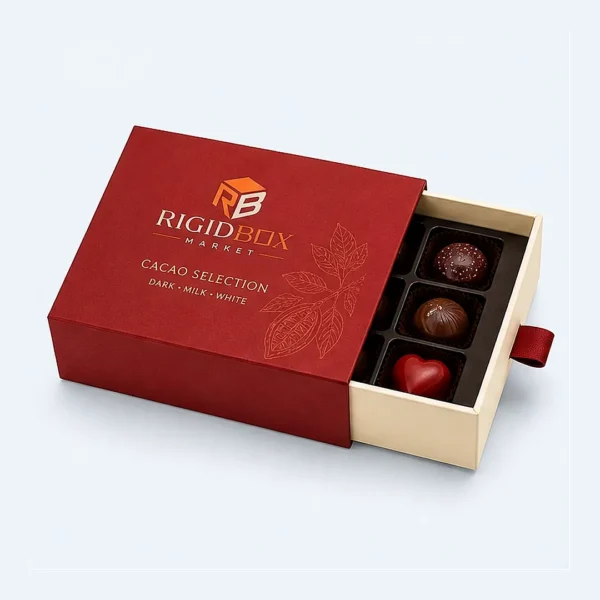
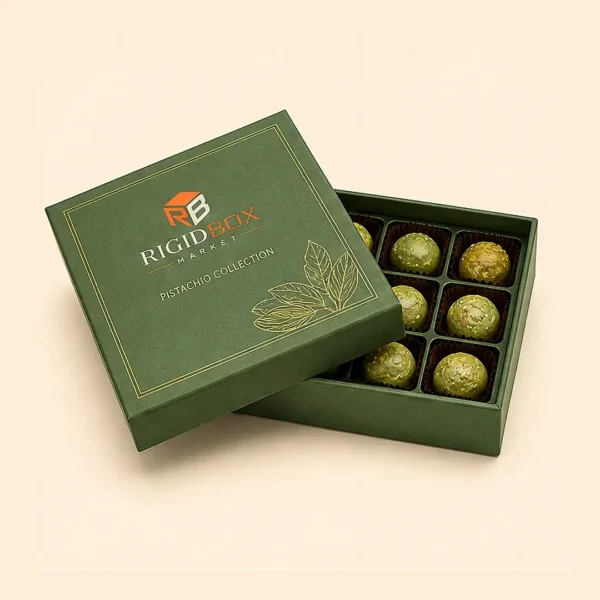
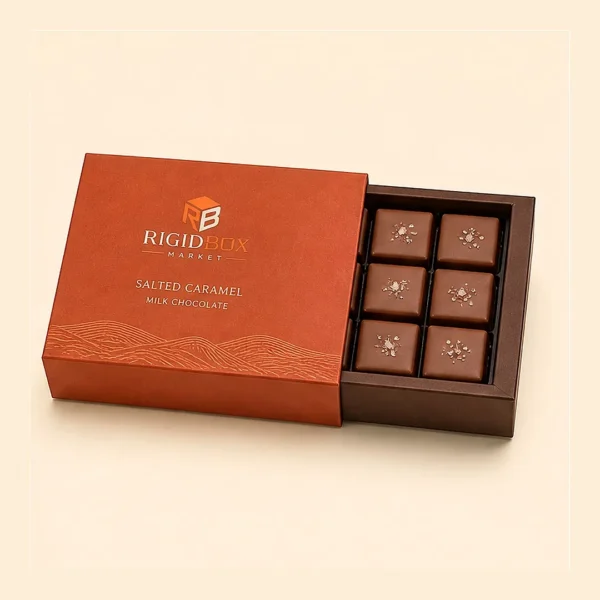
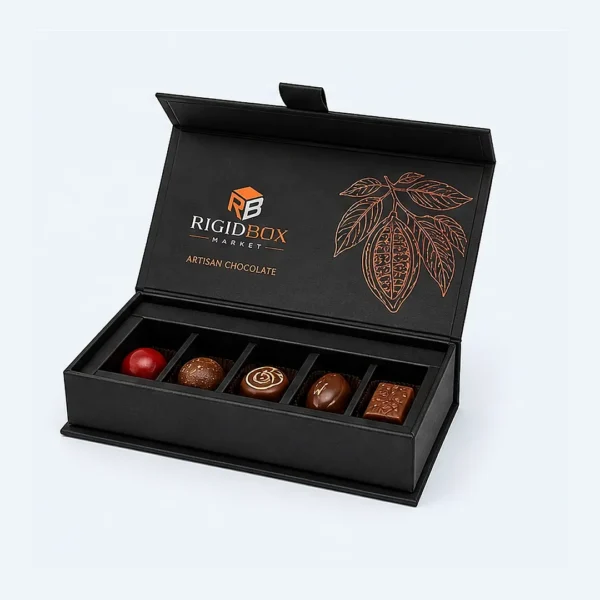
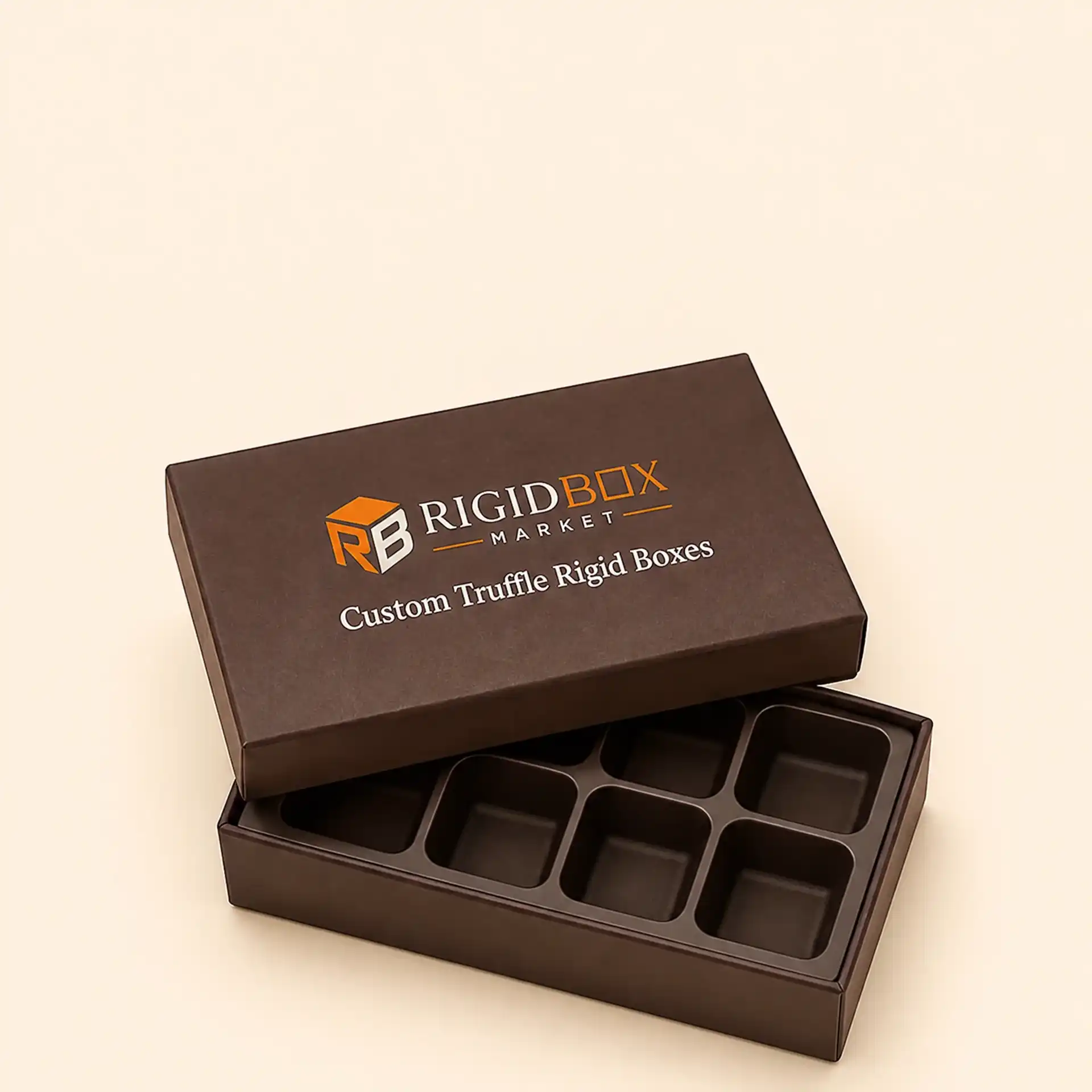
The shell is built from food-safe rigid chipboard, with interior components either food-grade themselves or separated from direct chocolate contact by a paper or foil liner, depending on how the pieces are packaged. Divided paperboard inserts are the standard interior solution, with individual slots or wells cut to hold each piece in a fixed position so nothing shifts or knocks against a neighboring piece as the box moves through shipping. Well depth is generally kept just below the piece’s height, leaving a small margin so the lid doesn’t press directly against delicate decorative work on top of each truffle or molded piece. Compartment depth is generally kept shallow and snug, since chocolate is soft enough at room temperature that even a small amount of movement inside a loose cavity can mark or deform a piece. Decorative toppings, common on artisan truffles, add another reason to keep compartments tight, since a piece that shifts even slightly can lose delicate garnish before it ever reaches the customer.
Customization Options
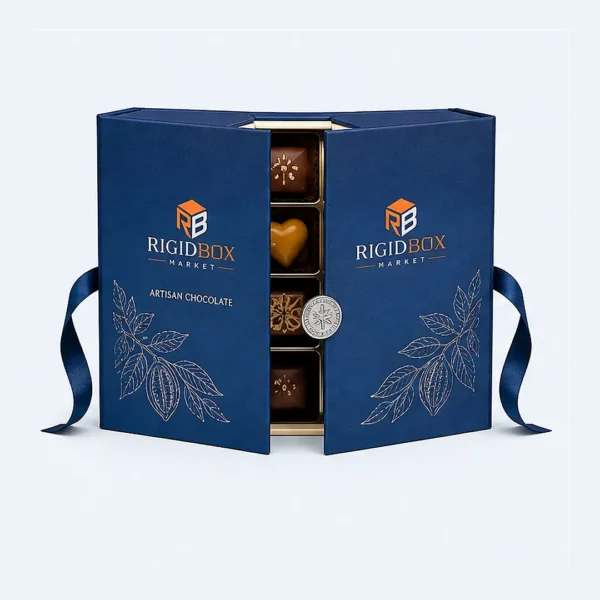
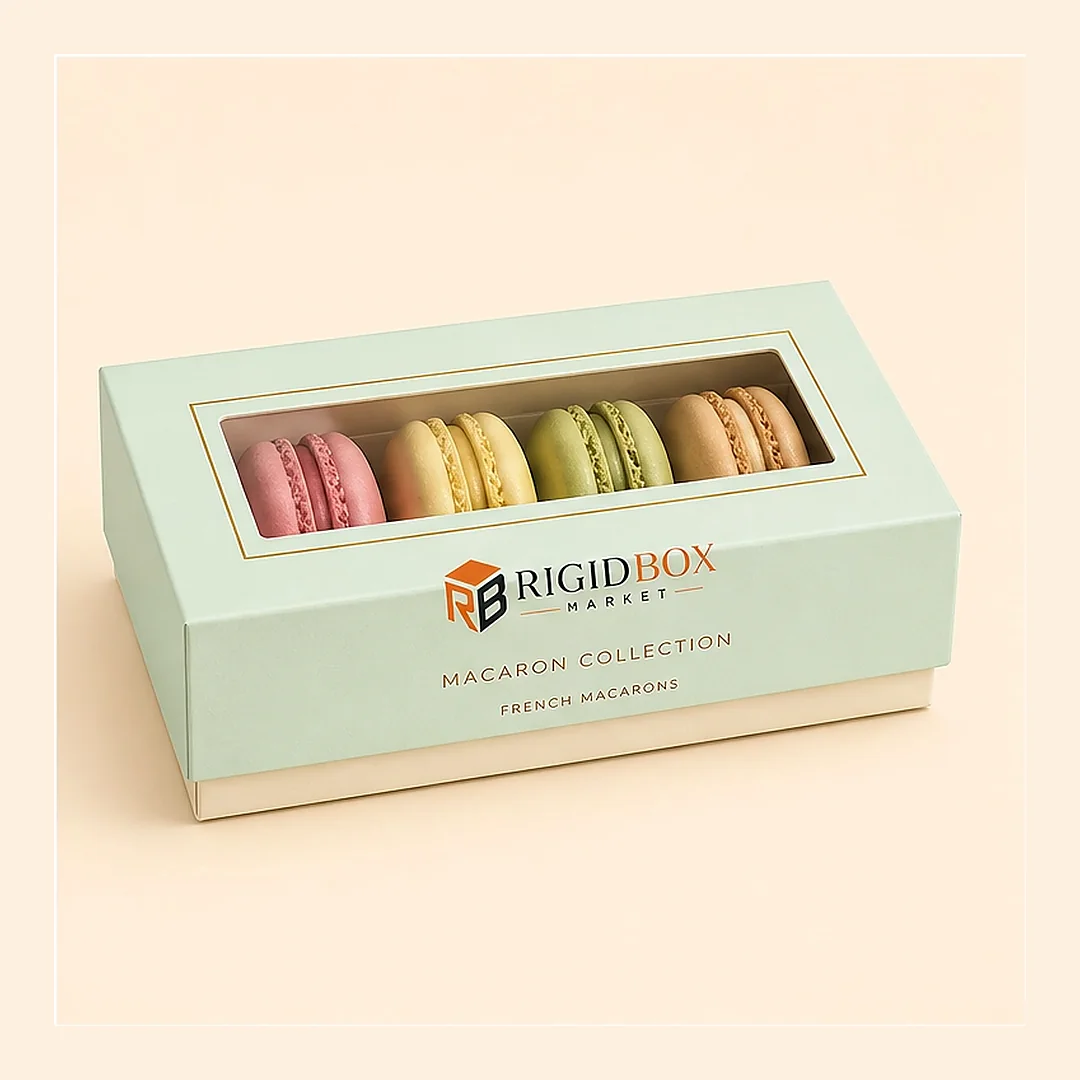
Compartment count and layout can be built around a specific assortment, from a small four-piece box to a larger multi-row collection, and insert material can be selected based on the chocolate style being packaged, since truffles and molded pieces sometimes need different cavity depths within the same box. Tiered, two-layer inserts are available for larger collections, letting a box hold twice the pieces without doubling its footprint. Standard exterior finishing includes foil stamping, embossing, debossing, spot UV, and matte, gloss, or soft touch lamination, and a window cutout is a popular addition for chocolatiers who want the arrangement visible as part of the retail presentation. Ribbon closures are also common for holiday and gifting-focused product lines, and a printed flavor guide or map insert is a frequent addition for mixed assortments, helping the recipient identify each piece without guessing based on shape alone.
- Food-safe rigid shell and interior components
- Divided paperboard inserts with individual compartment wells
- Foil stamping, embossing, debossing, and spot UV finishing
- Optional window cutout to showcase the arrangement
- Ribbon closures for holiday and gift-focused collections
Who It’s For
Chocolatiers and confectionery brands use this format as their primary retail and gifting packaging, since the divided interior lets a wide assortment travel and present as one cohesive collection rather than loose pieces in a bag. Gift retailers selling chocolate as part of a broader hamper or seasonal bundle rely on it for the same structural reasons, and hospitality brands offering chocolate amenities or welcome gifts use smaller versions of the same construction for individual guest presentations. Corporate gifting programs also lean on this format heavily during holiday seasons, when a branded chocolate box often serves as the primary client or employee gift across an entire company.
The Rigid Box Market Advantage
Compartment fit is what determines whether a chocolate box arrives looking exactly as it did when it left the workshop or with pieces visibly shifted and marked from transit, and it’s the detail customers notice immediately, whether they consciously register it as packaging quality or simply as a good or bad first impression. Rigid Box Market builds compartment tooling to the specific piece sizes and shapes in a given assortment, and holds that fit consistent across full production runs regardless of order size.
This format works best when we know the assortment mix up front, since piece shapes across a collection often determine the compartment grid more than piece count alone. Send over your piece count, sizes, and order volume, and we’ll follow up with a free quote.